Key Takeaways
- Long-blooming perennials keep beds colorful for more of the season.
- Coneflower, coreopsis, catmint, and salvia offer lasting blooms.
- Deadheading can encourage some perennials to bloom again.
- Mixing bloom times helps maintain color from spring through fall.
- Choose perennials based on light, size, bloom time, and growing needs.
Perennials earn their place in the garden by returning year after year, but some give you much more color than others. A plant that flowers for several weeks or produces another flush later in the season can keep a bed looking lively for much longer.
For gardeners shopping at a plant nursery in Sullivan, IL, bloom length is worth considering alongside color, mature size, light, and growing conditions. Central Illinois brings cold winters, humid summers, and plenty of seasonal change, so choosing plants that suit the region matters.
The right mix can give you dependable color without expecting every perennial to bloom at the same time.
Which perennial flowers bloom for a long time?
Some perennials naturally flower over a long stretch, while others respond well to deadheading or trimming. These are strong options to consider for extended seasonal color.
1. Coneflower
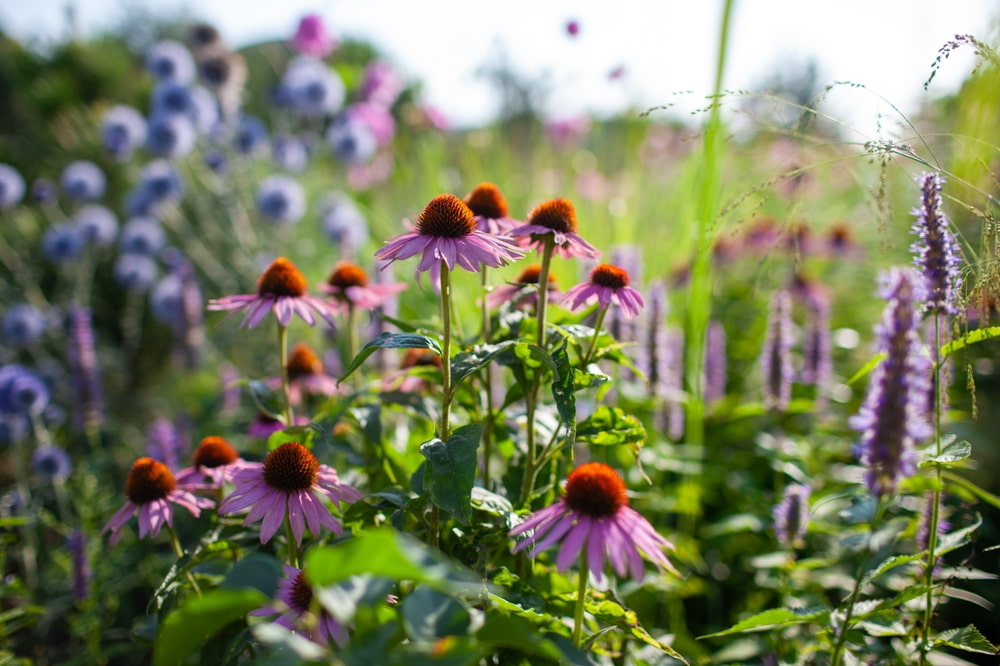
Coneflowers are a familiar perennial for sunny beds. Their upright stems and daisy-like blooms can carry color through a large part of summer.
They are available in more than the classic purple, with varieties in:
- Pink
- White
- Yellow
- Orange
- Red-toned shades
Their sturdy shape also works well through the middle or back of a mixed perennial border.
2. Coreopsis
Coreopsis brings a lighter, more relaxed look to a planting. Many varieties produce a generous run of flowers, especially when faded blooms are removed.
Why it works well in mixed beds
Its smaller flowers pair easily with larger blooms and taller plants. Yellow is common, though some varieties introduce red, pink, and multicolored flowers. A light trim after the first heavy flush can also encourage more growth on certain varieties.
3. Catmint
Catmint forms soft mounds of foliage topped with purple-blue flowers. It works especially well at the front of borders, beside paths, or around taller perennials.
After its first bloom cycle, trimming the plant can encourage another round of flowers. Once established, it is generally an easygoing choice for sunny areas with good drainage.
4. Black-eyed Susan
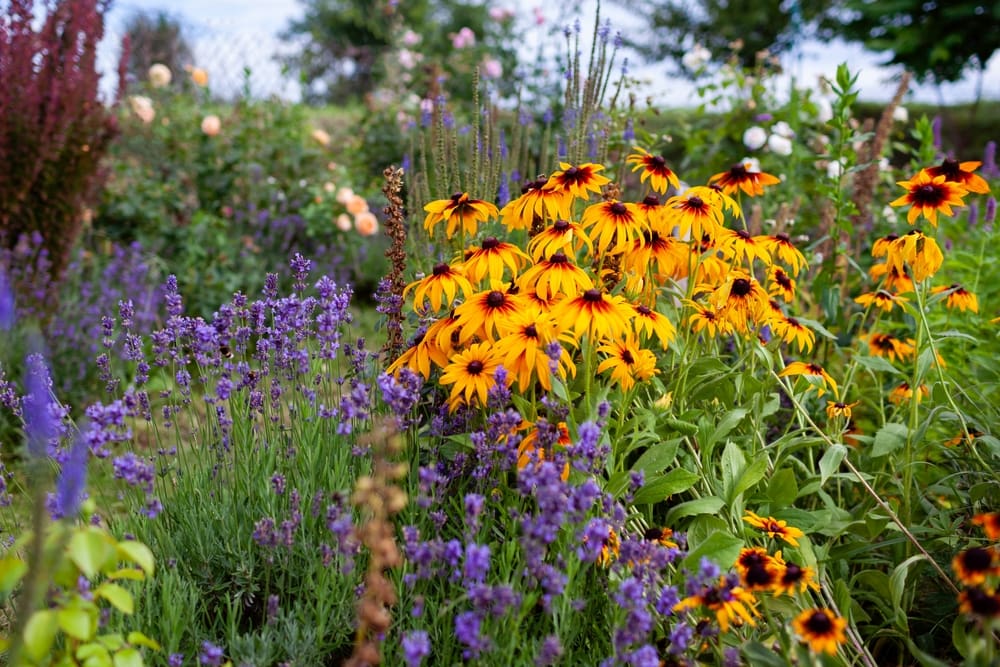
Black-eyed Susans bring strong color later in the summer, when some earlier perennials are starting to slow down. Their golden petals and dark centers work well with:
- Ornamental grasses
- Purple-flowering perennials
- Taller border plants
- Other late-season bloomers
They are especially useful when you want to extend color deeper into the growing season.
5. Perennial salvia
Perennial salvia produces upright flower spikes that add height and structure without making a planting feel heavy. Purple and blue varieties are especially common. Removing faded flower spikes can encourage additional blooming on many types.
Where salvia adds the most interest
Its vertical form creates contrast beside rounded flowers, low-growing foliage, and broader leaves. That makes it useful for adding shape as well as color.
6. Yarrow
Yarrow produces broad clusters of small flowers on sturdy stems. Its flat bloom shape brings variety to beds filled with daisies, spikes, and rounded flower heads.
Available colors may include:
- Yellow
- White
- Pink
- Red
- Soft pastel shades
Yarrow generally performs best with plenty of sun and soil that drains well.
7. Garden phlox
Garden phlox adds larger flower clusters and works well through the middle or back of a perennial bed. Its taller habit makes it a good companion for lower-growing plants. Different cultivars offer shades of pink, purple, white, and red.
Give it room to breathe
Spacing matters with garden phlox. Good air circulation and a location suited to the variety can help the foliage and flowers stay attractive through the season.
8. Hardy geranium
Hardy geraniums are perennial plants that form spreading mounds topped with delicate flowers. They are different from the annual geraniums commonly used in summer containers.
Some varieties are known for especially long flowering periods. Their softer growth habit works well:
- Along borders
- Beneath taller perennials
- Around shrubs
- In spaces that need low, spreading coverage
How can you keep perennial flowers blooming longer?
Plant choice matters, but placement and routine care also affect how much flowering you get from a perennial.
1. Match the plant to the sunlight
A sun-loving perennial placed in too much shade may grow without producing its strongest display. Before choosing a plant, look at:
- How many hours of direct sun the area receives
- Whether nearby trees create afternoon shade
- How the light changes from spring into summer
Matching the perennial to the site gives it a better foundation for healthy growth and flowering.
2. Remove spent flowers when it helps
Deadheading means removing blooms after they fade. For certain perennials, this can encourage another round of flowers.
Know whether the variety reblooms
Not every perennial responds the same way. Some benefit from regular deadheading, while others finish flowering naturally and move into seed production. Knowing the variety helps you decide whether trimming is worthwhile.
3. Leave enough growing space
A young perennial may look small in its nursery container, but its mature width can be much greater.
Crowded plants may compete for:
- Light
- Water
- Nutrients
- Air circulation
Spacing around mature size allows the bed to fill in gradually without putting unnecessary pressure on neighboring plants.
How can you keep your perennial garden colorful for longer?
Long-blooming varieties help, but the most dependable color often comes from combining plants with different flowering periods.
1. Build around overlapping bloom times
Choose plants that reach their peak at different points in the growing season. A balanced bed may include:
- Spring bloomers
- Early-summer flowers
- Midsummer perennials
- Late-summer and early-fall color
As one group fades, another can begin to take over.
2. Use foliage to support the flowers
Flowers are only part of the planting. Foliage, plant shape, texture, and seed heads continue contributing when fewer blooms are open.
Mix different forms
Combining upright plants, rounded mounds, spreading foliage, and broader leaves adds visual interest throughout the season. This also keeps a perennial bed from looking empty during gaps between major flowering periods.
3. Repeat a few reliable performers
Repeating the same perennial in several places can help carry color across a larger bed. A few well-chosen varieties can create a stronger visual rhythm than filling every open space with a different flower.
What should you consider before choosing long-blooming perennials?
The longest bloom period does not automatically make a plant the best choice for every garden. The site still needs to support it.
1. Check the mature size
Look beyond the size of the plant at the nursery. Consider how tall and wide it is expected to become once established. This helps you place shorter flowers toward the front and larger plants where they will not overwhelm neighboring varieties.
2. Think about the entire growing season
A plant may be spectacular while blooming and fairly plain afterward. Others have foliage or seed heads that remain attractive well beyond flowering. Looking at the full-season appearance can help you create a bed that stays interesting for longer.
3. Choose plants that work together
Think about bloom timing, height, color, foliage, and growth habit as a group. A strong perennial combination often includes:
- Different bloom periods
- A mix of heights
- Contrasting flower shapes
- Varied foliage textures
- Colors that repeat across the bed
Where can I find a good plant nursery in Sullivan, IL & the vicinity?
The Village Garden is a full plant nursery and garden center serving Sullivan and Central Illinois, with a wide selection of living plants, gardening essentials, and seasonal inspiration for outdoor spaces.
Our nursery carries perennials suited to different colors, heights, bloom times, and growing conditions, giving gardeners plenty of options for building a bed that stays interesting through more of the season. While you’re here for the nursery, you can also browse fall décor for your home as the shop shifts into the new season.
Whether you are starting a new planting area, refreshing an established garden, or adding color to a yard near Wyman Park, you can browse the nursery and get practical guidance based on your sunlight, available space, and planting goals. Visit us today!